
Renovation Permits in Toronto, What Every Homeowner Should Know
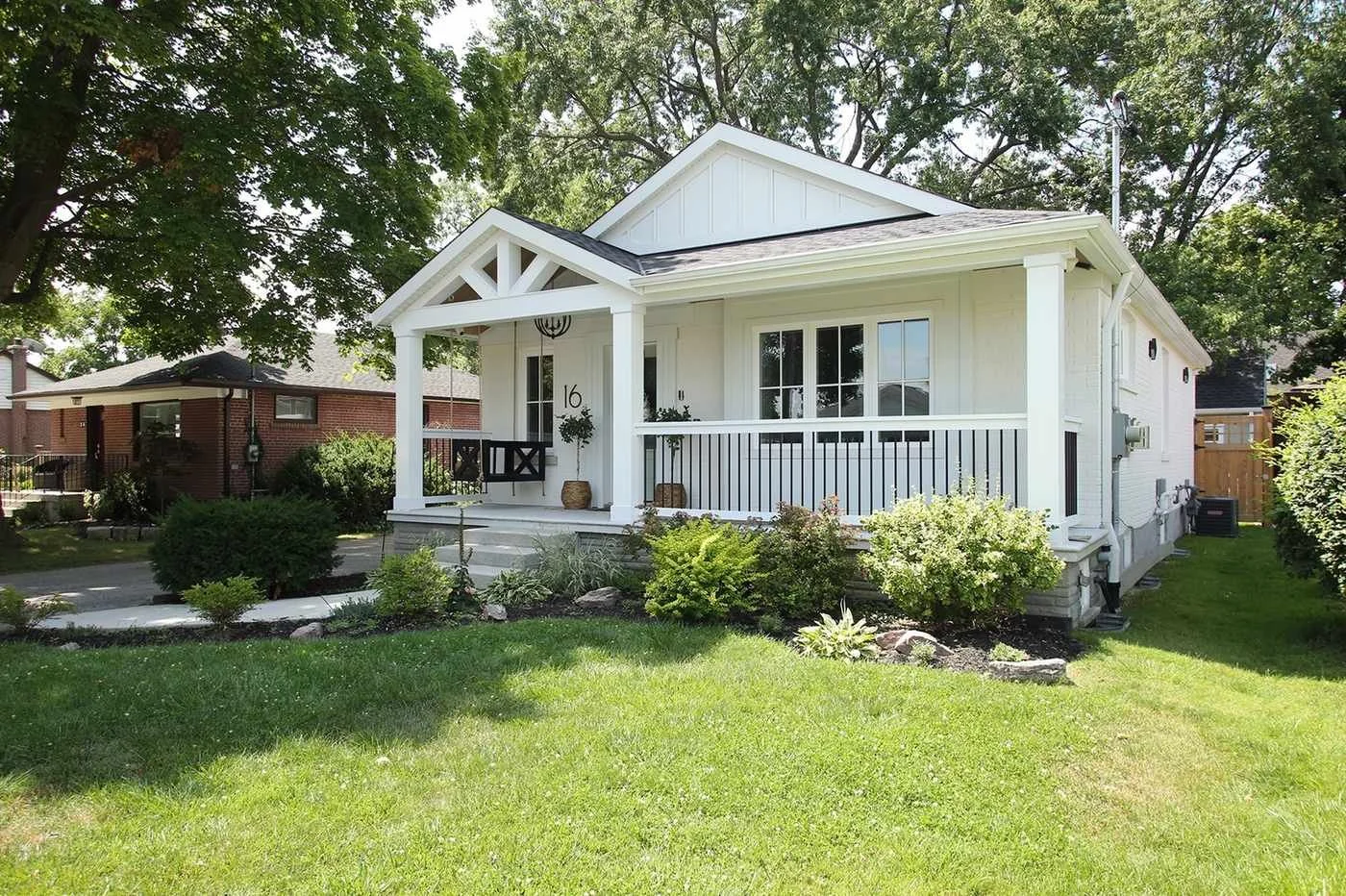
It is the permit question nearly every renovation client asks us first. "Do we need one?" Then, almost in the same breath, "How long does it take, and can you deal with it so we do not have to?"
After 15+ years of running projects across Toronto's west end, Chris and Julie can tell youthe honest answer before the first sketch is drawn. Some of the most exciting renovations, anew kitchen layout, a second storey, a basement apartment, a rear addition, do require a City of Toronto building permit. Others, like cosmetic refreshes, do not. Knowing which bucket your project falls into shapes your timeline, your budget, and your neighbour relationships.
This guide walks through what we wish every Toronto homeowner knew before they started calling contractors. It is not legal advice, and permit rules evolve, so always confirm the current requirements with your design-build team or the City of Toronto Building Division before you commit.
When a Permit is Required
The City of Toronto requires a building permit for most work that changes a home's structure, use, plumbing, heating, or exterior. The triggers below are drawn from the Building Code Act and from the Toronto Building application categories published on toronto.ca. In practice, you will almost always need a permit for:
Structural changes
Removing or altering a load-bearing wall, adding a beam, or anything that changes how the house carries weight. Sealed structural drawings under the Ontario Building Code are required.
Additions of any kind
Second storeys, rear additions, side builds, garden suites, and coach houses. Many also require a minor variance from the City of Toronto Committee of Adjustment if they exceed Zoning By-law 569-2013.
Basement underpinning or lowering
If you are digging the basement down to create ceiling height, you are in permit territory.
Plumbing, HVAC, or electrical rough-in that changes the system
Adding a basement bathroom, moving a kitchen, running new HVAC trunks, or relocating an electrical panel.
Basement apartments and secondary suites
These need a permit plus compliance with the Ontario Building Code Part 9 requirements for egress, fire separation, and sound insulation.
Window and door openings
Enlarging, cutting in a new one, or converting a window to a door.
Decks over 60 centimetres from grade, or attached to the house.
You typically do not need a permit for cosmetic, like-for-like work: paint, flooring, tile, trim, a kitchen or bathroom refresh that keeps fixtures in the same footprint, same-size window or door replacement, shingle replacement, and interior doors.
The grey zone sits between those two lists. A kitchen renovation that keeps the sink in place but adds an island with a prep sink crosses into plumbing-permit territory. A "simple" bathroom move becomes permit work the moment you relocate the toilet flange. This is where we see homeowners get surprised, and it is where a design-build team earns its keep. We scope the permit question during our first site visit, not after demolition starts.
How to Apply (or Let Us Handle It)
Toronto permits go through the City's Toronto Building Division. The formal process is:
1. Prepare a complete application
This includes drawings stamped by a BCIN-qualified designer or an Ontario-licensed building designer or engineer where the project requires it, a site plan, structural details, mechanical drawings where applicable, and the application forms.
2. Confirm zoning compliance
Before the building permit is reviewed, the application has to clear zoning. If the project exceeds Zoning By-law 569-2013 for height, setback, floor area, or coverage, you will need a minor variance through the Committee of Adjustment, which adds time to the process.
3. Submit through the City's Application Submission Tool
Toronto has moved most permit intake online. Applications are uploaded, fees are paid, and reviewer questions come back digitally.
4. Respond to reviewer comments
Almost every permit application gets at least one round of reviewer questions. The speed of your response shapes the total timeline more than almost anything else.
5. Receive the permit and schedule inspections
Once the permit is issued, your contractor books inspections at the required stages: footing, framing, insulation, plumbing rough-in, HVAC rough-in, and final.
On every Waterfront project where a permit is involved, we handle this entire process as part of our 4-step process. That is the point of a design-build: your drawings, your permit application, and your construction all live under one roof. You are not chasing a designer for revised plans while your contractor waits on a reviewer. The same team that designed the space submits the application, answers the reviewer's questions, and books the inspections.
For homeowners working without a design-build team, the path is still workable, but it involves stitching together a designer, an expeditor, a contractor, and the City. Our honest counsel: if your project crosses into permit territory, the hours you save by having one team run the permit usually pay for themselves before framing starts.
Timelines and Fees
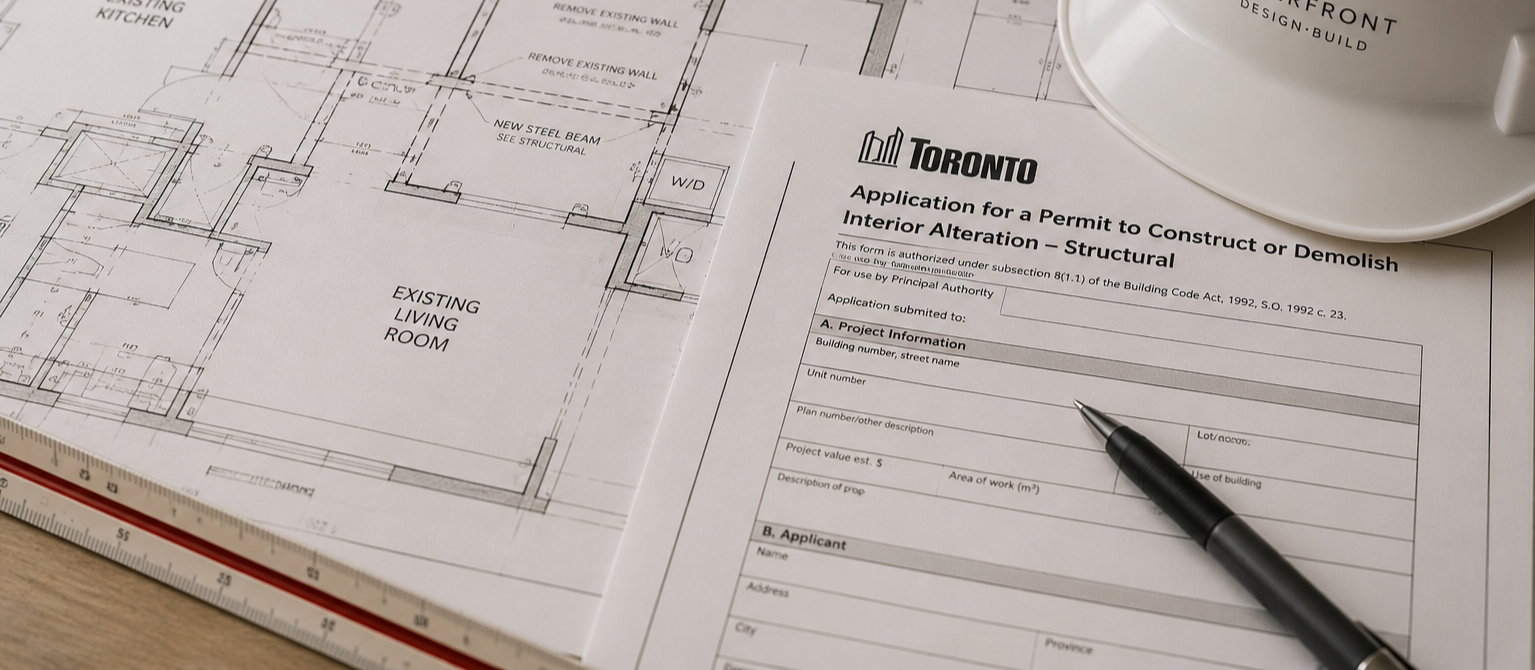
Permit timelines in Toronto depend on the project type, which review stream the application falls into, and the current volume at the Building Division. The City of Toronto publishes review-time targets by stream on the Apply for a Building Permit page:
House stream: 10 business days for the first review of a complete application. This stream covers most single-family alteration and small addition projects.
Small Building stream: 15 business days for the first review of a complete application.
Large or Complex Building stream: 20 to 30 business days for the first review of a complete application. Larger additions and projects with significant structural or mechanical scope fall into this stream.
Committee of Adjustment (variances): minor variance applications are typically heard within 60 calendar days of a complete submission, per the City of Toronto Committee of Adjustment process, including the neighbour notice period and the hearing date.
These are review-time targets for complete applications. They are not the calendar time from "I want a permit" to "I have a permit." Incomplete submissions, missing or uncoordinated drawings, zoning variances that route through the Committee of Adjustment, and reviewer revision rounds can all extend the real elapsed time substantially. The biggest timeline compressor we have found is submitting a genuinely complete application the first time, which means pre-checking zoning before submission and having all drawings coordinated at the point of upload.
Fees are set by the City of Toronto and change from time to time. As of writing, permit fees for residential renovations are calculated based on the construction value or floor area of the project, with rates published on the City of Toronto Building Permit Fees schedule, which is updated each January. Your design-build team should be giving you a permit-fee estimate as a line item in your project budget. If your contractor cannot, that is a signal to ask more questions. We include the City's published permit fee in our project budgets as a direct pass-through, so you see exactly what the City charges.
For the current fees and the up-to-date application forms, confirm directly with the City of Toronto Building Division. The fee schedule and the process details are the City's to maintain, not ours.
Projects That Go Sideways Without a Permit
We get calls every year from homeowners trying to sell, refinance, or appraise a Toronto home who have just discovered that a previous owner or contractor did permit-scope work without pulling one. The pattern repeats:
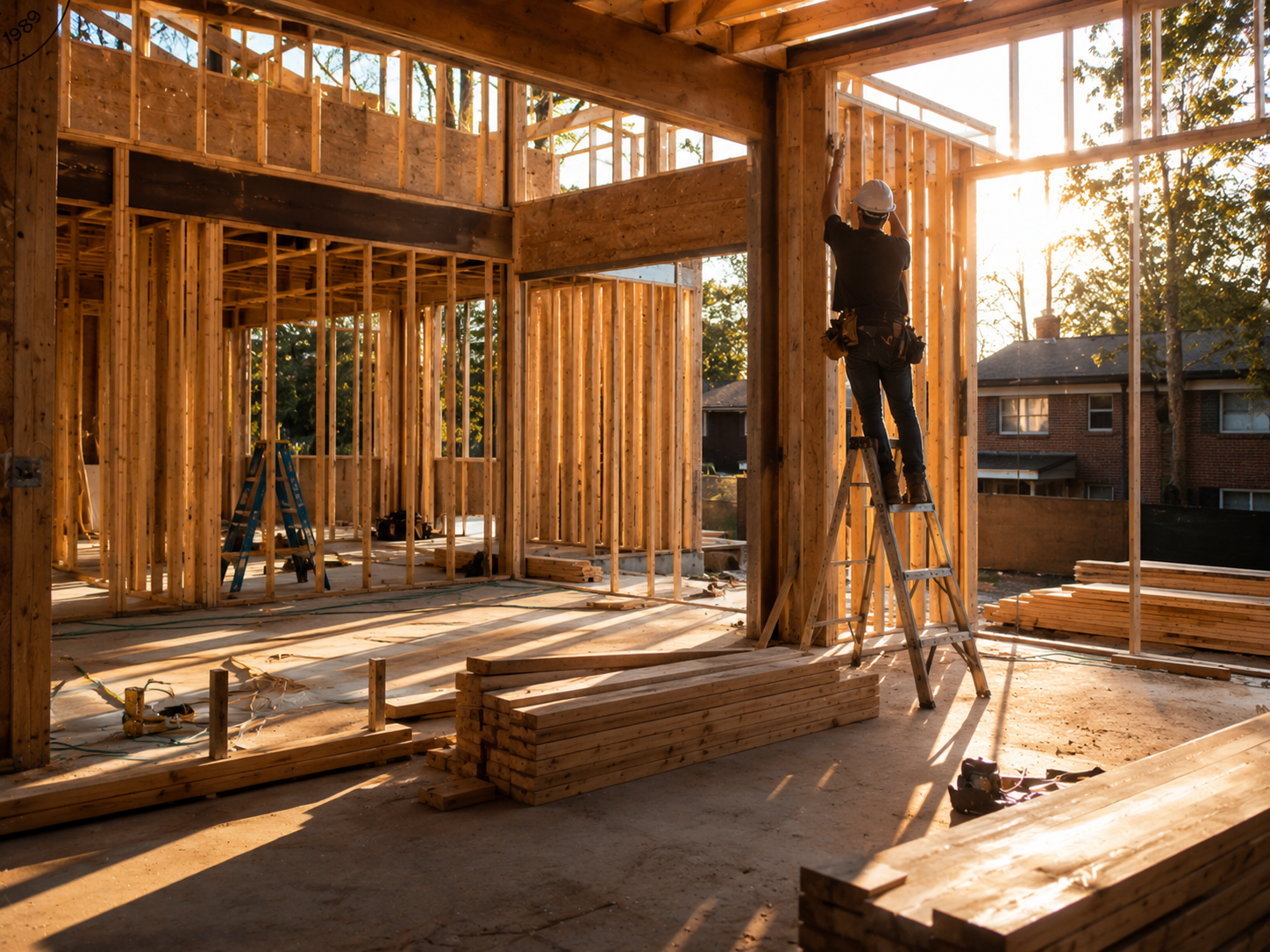
Basement apartment built without a permit. The suite looks finished, but it does not meet egress or fire separation requirements, and the home cannot be sold as a legal two-unit property.
Load-bearing wall removed with no engineer sign-off. The home inspector flags sagging above the opening during a pre-sale inspection, and the buyer's offer disappears.
Rear addition built without zoning compliance. Years later, the Committee of Adjustment is unwilling to retroactively approve the variance, and the homeowner faces a compliance order.
Electrical panel upgrade done without an ESA inspection. The insurance renewal gets rejected, or a claim is denied after a fire.
The cost of un-permitted work is almost never the original permit fee. It is the cost of tearing open finishes years later to prove the structure is sound, or the cost of a home sale falling through. When a contractor says "we can skip the permit, it will be fine," the risk sits entirely on your side of the ledger. The City does not come after the contractor, it comes after the property. On every Waterfront project, we handle permits as part of the design-build process because it is the only way to protect the homeowner's investment and the home's long-term value.
Where to Start
If you are weighing a renovation in Toronto and you are not sure whether your project needs a permit, the honest next step is a conversation with a design-build team that has done the kind of work you are planning. Chris and Julie have walked through this exact question with hundreds of Toronto homeowners, and the first site visit is where it gets answered. We will tell you what your project needs, what the timeline looks like, and how the permit fits into the overall budget, before you commit to anything.
For more on the specific project types where permits most often apply, see our pages on Home Additions, Second Storey Additions, Interior Reconfigurations, and Basement Apartments.
Ready to start? Contact Waterfront Home Improvements to book a site visit. We handle the permits so you can focus on the home you are building.
About Waterfront Home Improvements
Waterfront Home Improvements is a husband-wife design-build practice run by Chris and Julie. Together they have spent more than 15 years on Toronto residential projects, with deep concentration in the west end: Roncesvalles, High Park, Swansea, Bloor West Village, The Junction, Etobicoke, and Mimico. Every project moves through their 4-step process under one roof: listen, design, price, build. The same two people who scope the addition are the people who price it, draw it, and stand on site while it is constructed.
Permits are not a side function of their practice, they are the spine of it. Chris and Julie have filed permit applications for kitchen layout changes, structural alterations, second storey additions, rear extensions, basement underpinning, and legal basement apartments through Toronto Building over the past 15 years. The guidance in this article reflects how those applications actually move, what reviewers ask for, where Committee of Adjustment timing breaks projects, and what the cost of un-permitted work looks like when a buyer's home inspector finds it years later. Chris leads the structural and engineering submission package; Julie leads the building-designer drawings and the zoning-compliance review.
Sources
Government and Regulatory
• City of Toronto, Building Permit Fees, https://www.toronto.ca/services-payments/building-construction/apply-for-a-building-permit/building-permit-fees/, accessed 2026-04-27.
• City of Toronto, Apply for a Building Permit, https://www.toronto.ca/services-payments/building-construction/apply-for-a-building-permit/, accessed 2026-04-27.
• City of Toronto, Committee of Adjustment, https://www.toronto.ca/city-government/planning-development/committee-of-adjustment/, accessed 2026-04-27.
• City of Toronto, Zoning By-law 569-2013, https://www.toronto.ca/city-government/planning-development/zoning-by-law-preliminary-zoning-reviews/, accessed 2026-04-27.
• Government of Ontario, Ontario's Building Code, https://www.ontario.ca/page/ontarios-building-code, accessed 2026-04-27.
Industry Associations
• Canadian Home Builders' Association (CHBA), https://www.chba.ca/, accessed 2026-04-27.
• Building Industry and Land Development Association (BILD), GTA, https://www.bildgta.ca/, accessed 2026-04-27.
Market Data
• Statistics Canada, New Housing Price Index, monthly, Table 18-10-0205-01, https://www150.statcan.gc.ca/t1/tbl1/en/tv.action?pid=1810020501, accessed 2026-04-27.
• Canada Mortgage and Housing Corporation, Housing Markets, Data and Research, https://www.cmhc-schl.gc.ca/professionals/housing-markets-data-and-research, accessed 2026-04-27.
• Houzz Research, https://www.houzz.com/research, accessed 2026-04-27.