
INTERIOR RECONFIGURATIONSInterior Reconfigurations and Load-Bearing Wall Removal in Toronto
Open up your main floor. Engineered, permitted, and built under one roof.
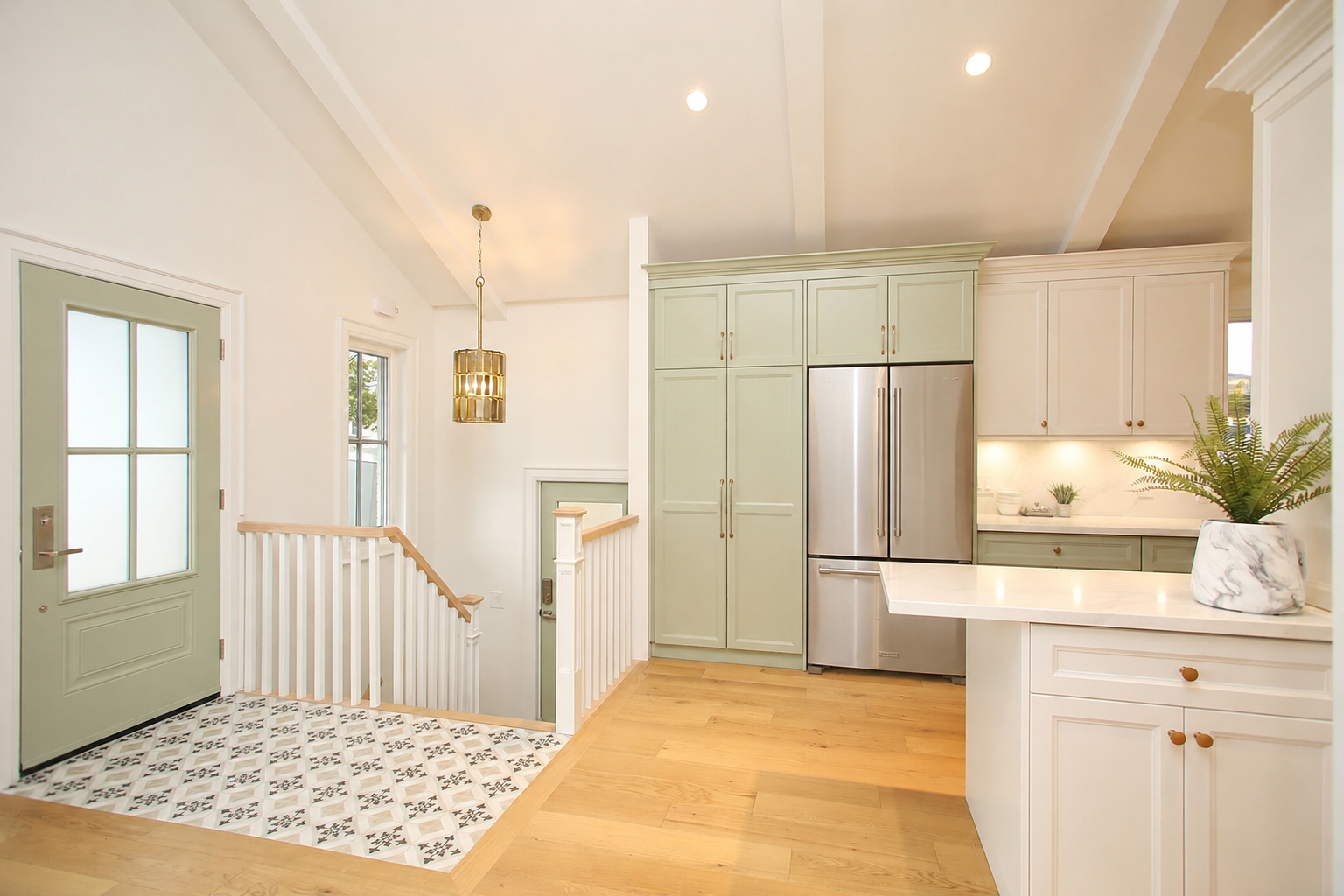
Many Toronto homes don’t need more square footage. They need better flow.
A large percentage of the city’s century and mid-century housing stock was designed around smaller, separated rooms — kitchens closed off from living spaces, narrow dining rooms, and layouts that no longer reflect how families live today.
An interior reconfiguration changes that.
At Waterfront Home Improvements, our interior remodel projects focus on structural reconfiguration, layout improvement, and open-concept living — often through load-bearing wall removal, beam installation, and coordinated main-floor redesign. These are not cosmetic renovations. They are engineered structural projects that reshape how the home functions day to day.
For over 15 years, Chris, Julie and the Waterfront team have led load-bearing wall removal projects across Toronto in neighbourhoods such as Etobicoke, Roncesvalles, Swansea, High Park, Mimico, and Mississauga through an integrated design-build process.
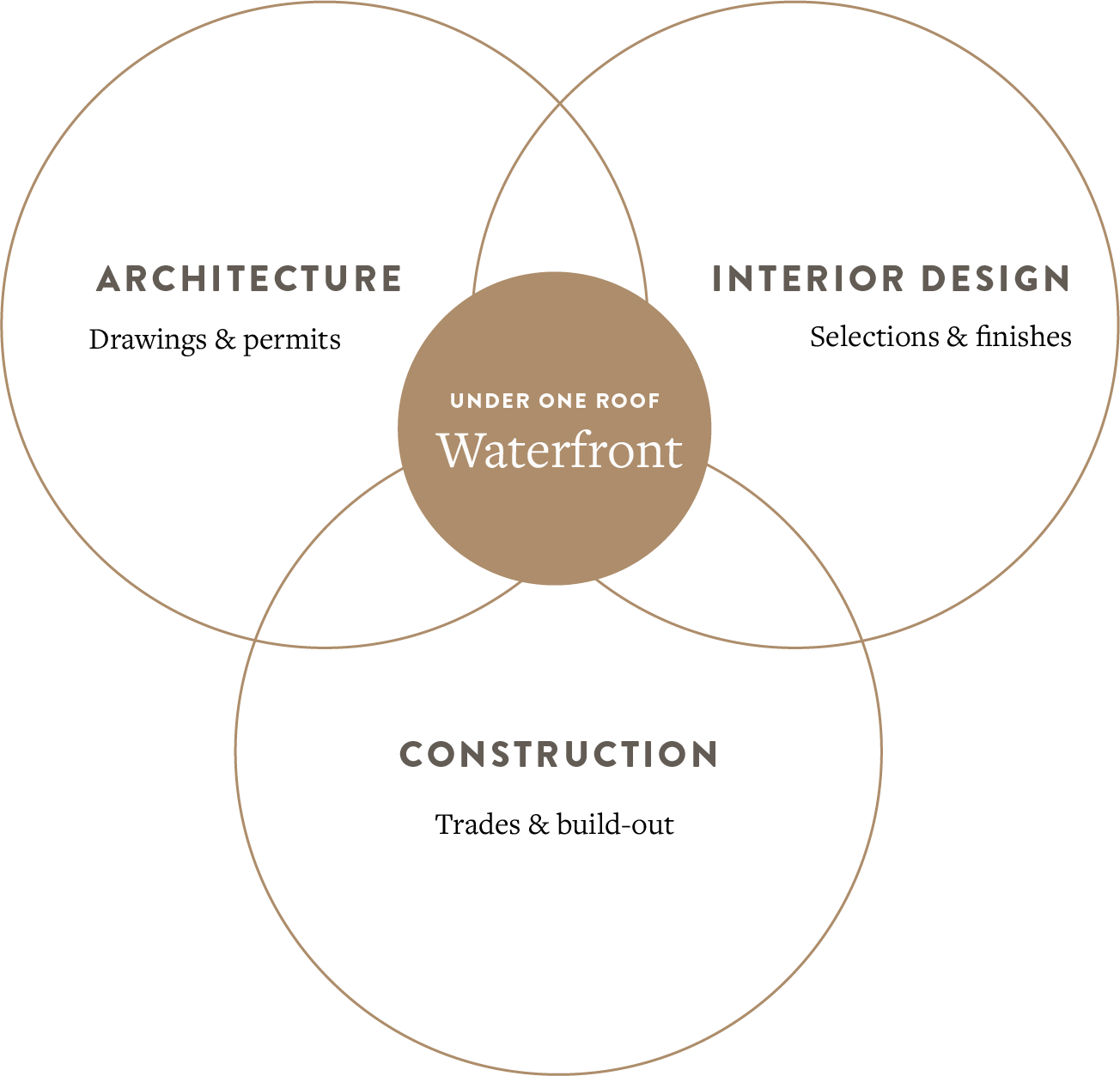
Every project is engineered, permitted, and constructed by the same team from beginning to end.
OPEN CONCEPTOpen Concept Conversions
Most open-concept renovations begin with one structural question: which walls actually carry load?
An open concept renovation project typically involves removing one or more load-bearing walls and replacing them with engineered structural beams supported by new bearing points or columns where required.
Once the structure is resolved, the home changes dramatically.
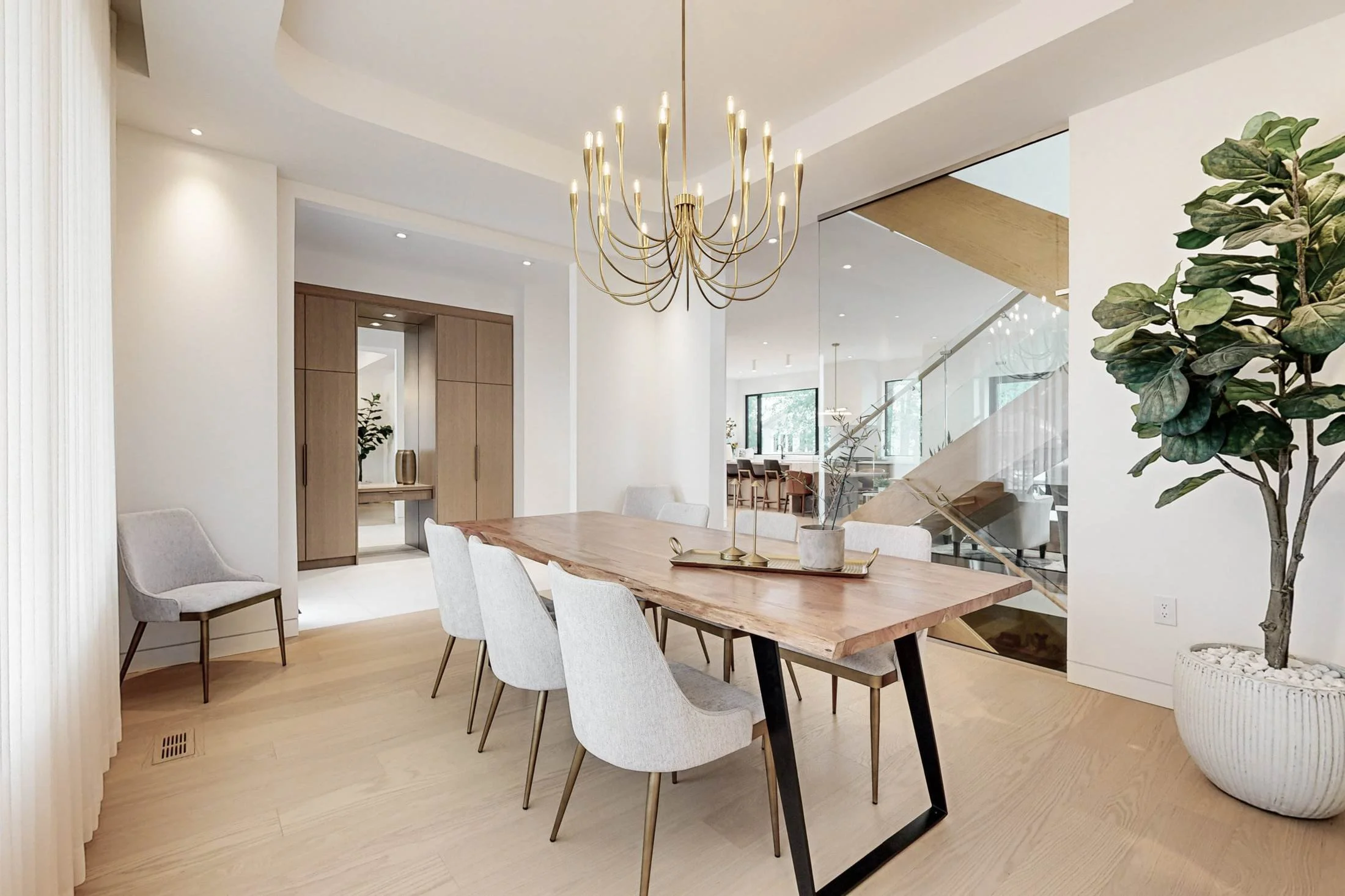
Separated kitchens become connected family spaces. Narrow circulation paths open into larger living zones. Dining rooms regain natural light and visual connection to the rest of the main floor.
Our team will undertake the redesign of the layout, cabinetry, finishes, lighting, and circulation, as well as coordinate the structural sequencing, shoring, beam installation, and finishing trades on site.
The result is not simply a larger-looking room. It’s a home that functions differently.
Many of the most successful projects involve opening the kitchen to the living and dining areas while refining the surrounding layout at the same time — improving storage, circulation, sightlines, and how the family moves through the space overall.
ENGINEERINGEngineering and Permits
Before demolition begins, our engineers prepare sealed structural drawings outlining beam sizing, bearing conditions, shoring requirements, and load paths above.
Beam selection is based on the span, structural load, ceiling conditions, and the desired final appearance of the space. Some homes allow for a flush beam integrated into the ceiling, while others require a dropped beam depending on the existing framing.
During construction, our team manages the structural sequencing directly — from shoring and demolition through beam installation, framing reinforcement, and inspections before finishing begins.
Once the structural work is complete, the project transitions into drywall, flooring, cabinetry, lighting, and final finishes.
PERMITSPermits for Interior Changes
Structural interior renovations in Toronto require permitting.
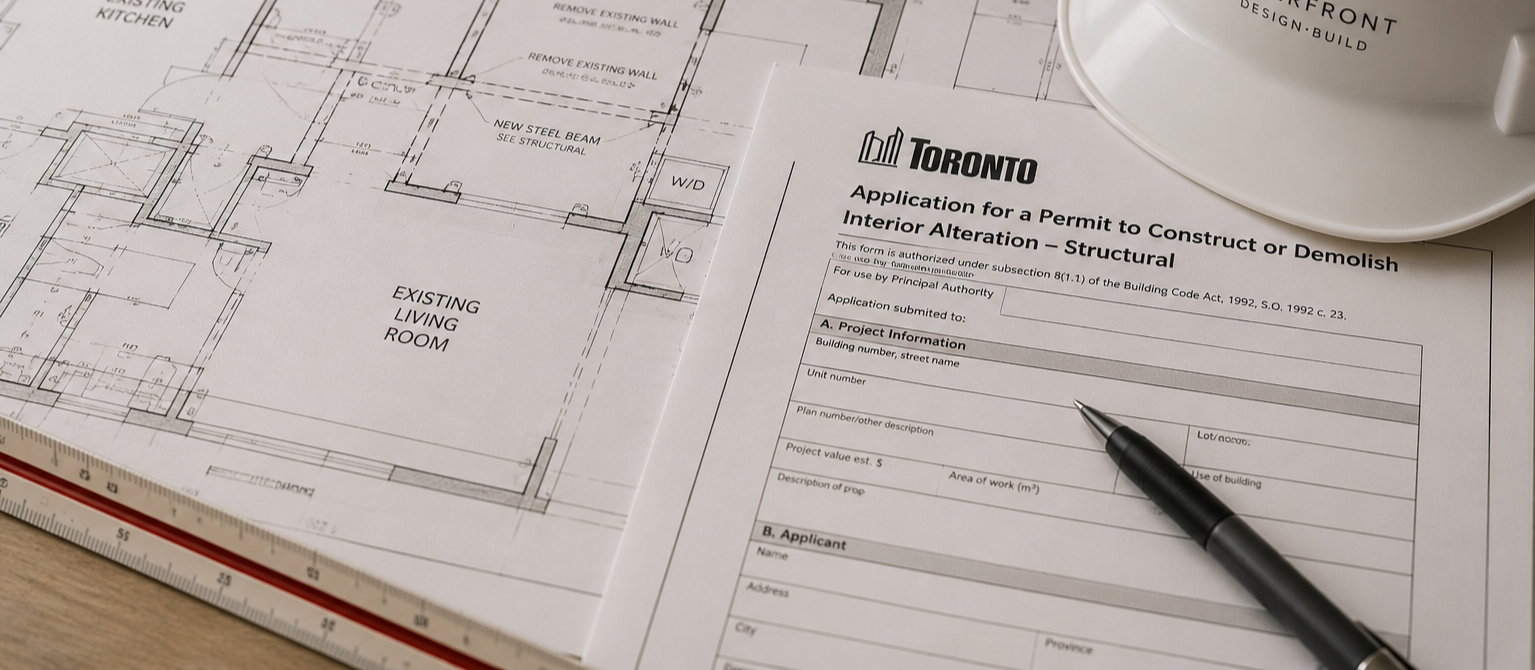
Our team coordinates the full permit package for load-bearing wall removal and interior reconfiguration projects, including structural review and any associated electrical, plumbing, or HVAC permits triggered by the renovation scope.
While some cosmetic renovations may not require permits, structural modifications almost always do — particularly where load-bearing walls, beam installations, or mechanical relocations are involved.
Typical inspections include:
framing inspection after beam installation,
structural review before closure,
and final inspection at project completion.
Because permitting and engineering are coordinated internally through our design-build process, projects move more efficiently from planning into construction.
RECENT PROJECTSRecent Load-Bearing Wall Removal Projects
Recent Toronto interior remodel projects completed by Waterfront include:
A Roncesvalles century semi where the wall between the kitchen and dining room was removed and replaced with a flush steel beam integrated into the ceiling
An Etobicoke bungalow where two load-bearing walls were removed to create a fully open kitchen, dining, and living space
A Swansea mid-century renovation where new structural columns became integrated millwork features within the redesigned family room
A High Park renovation where structural wall removal improved circulation, natural light, and sightlines across the entire main floor
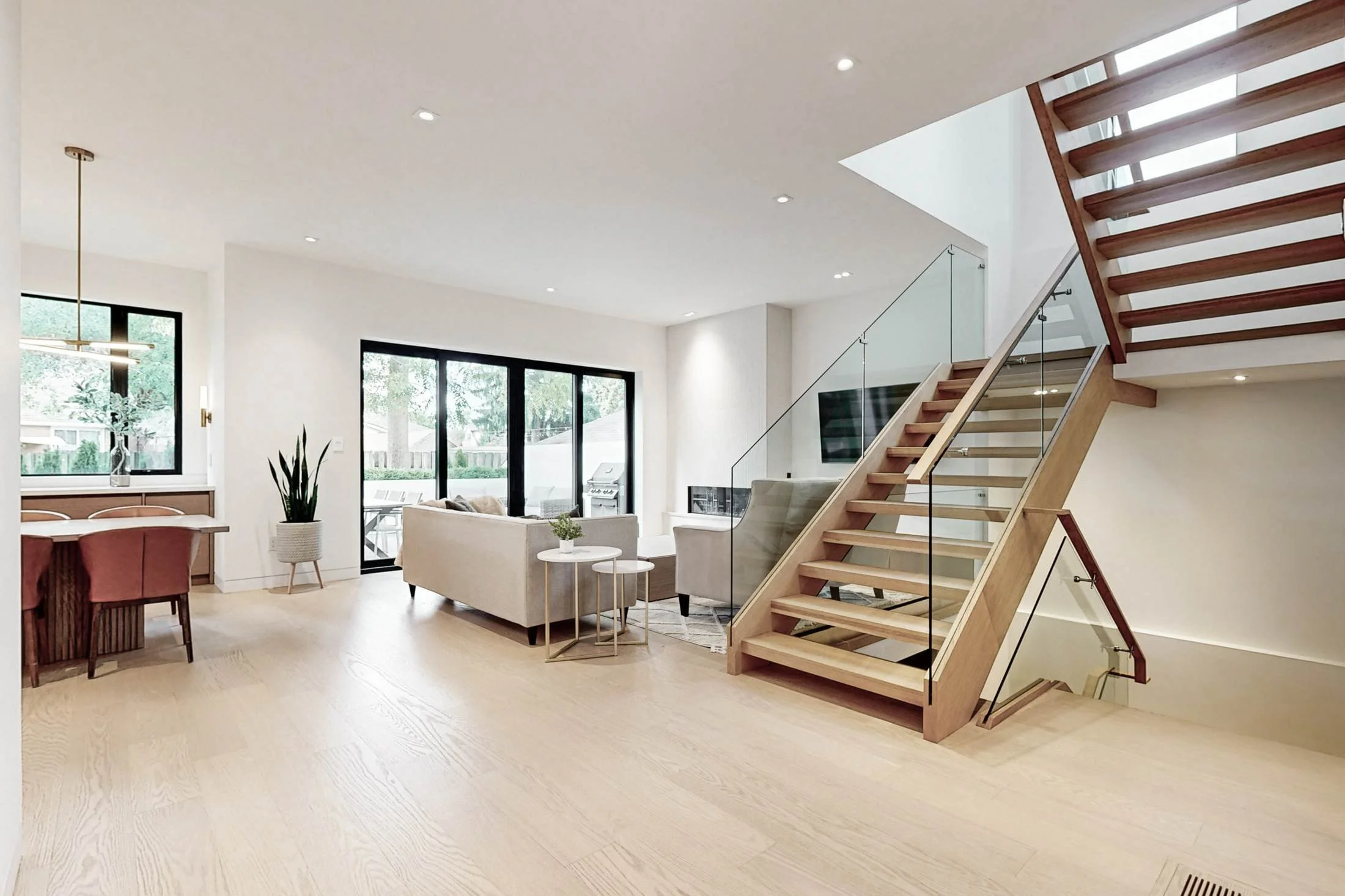
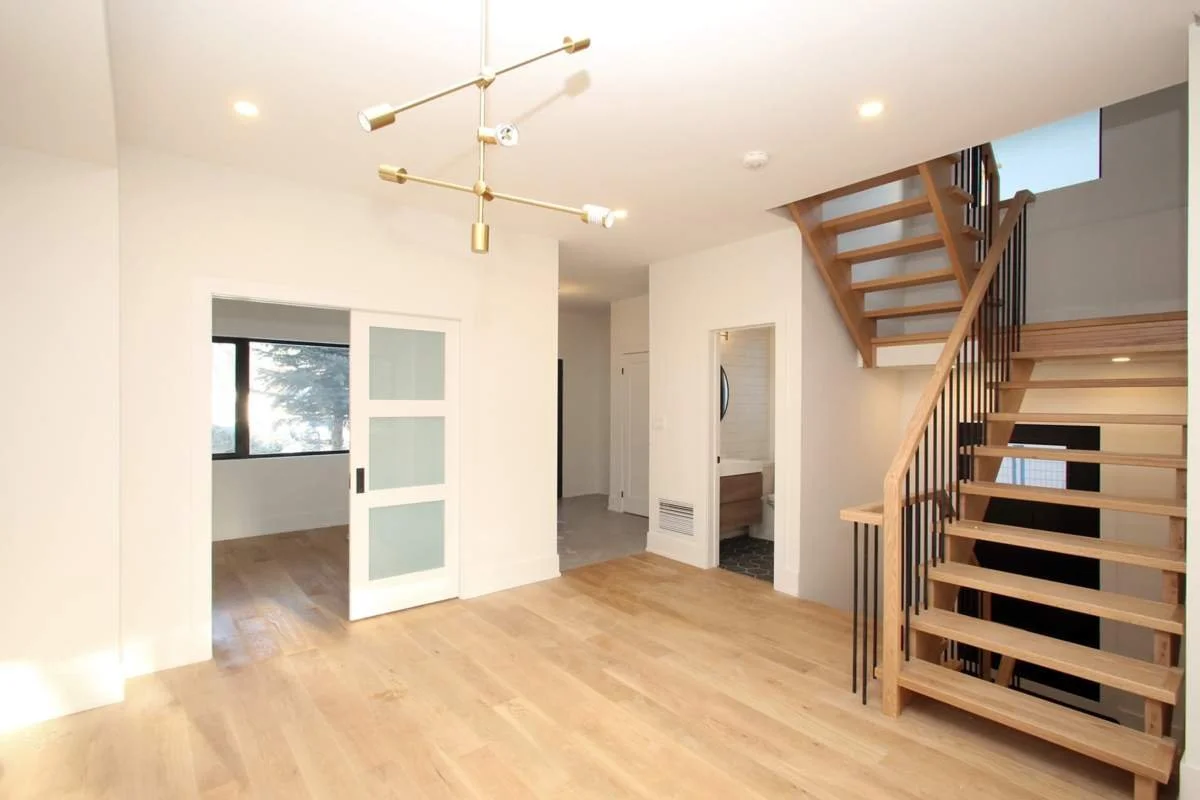
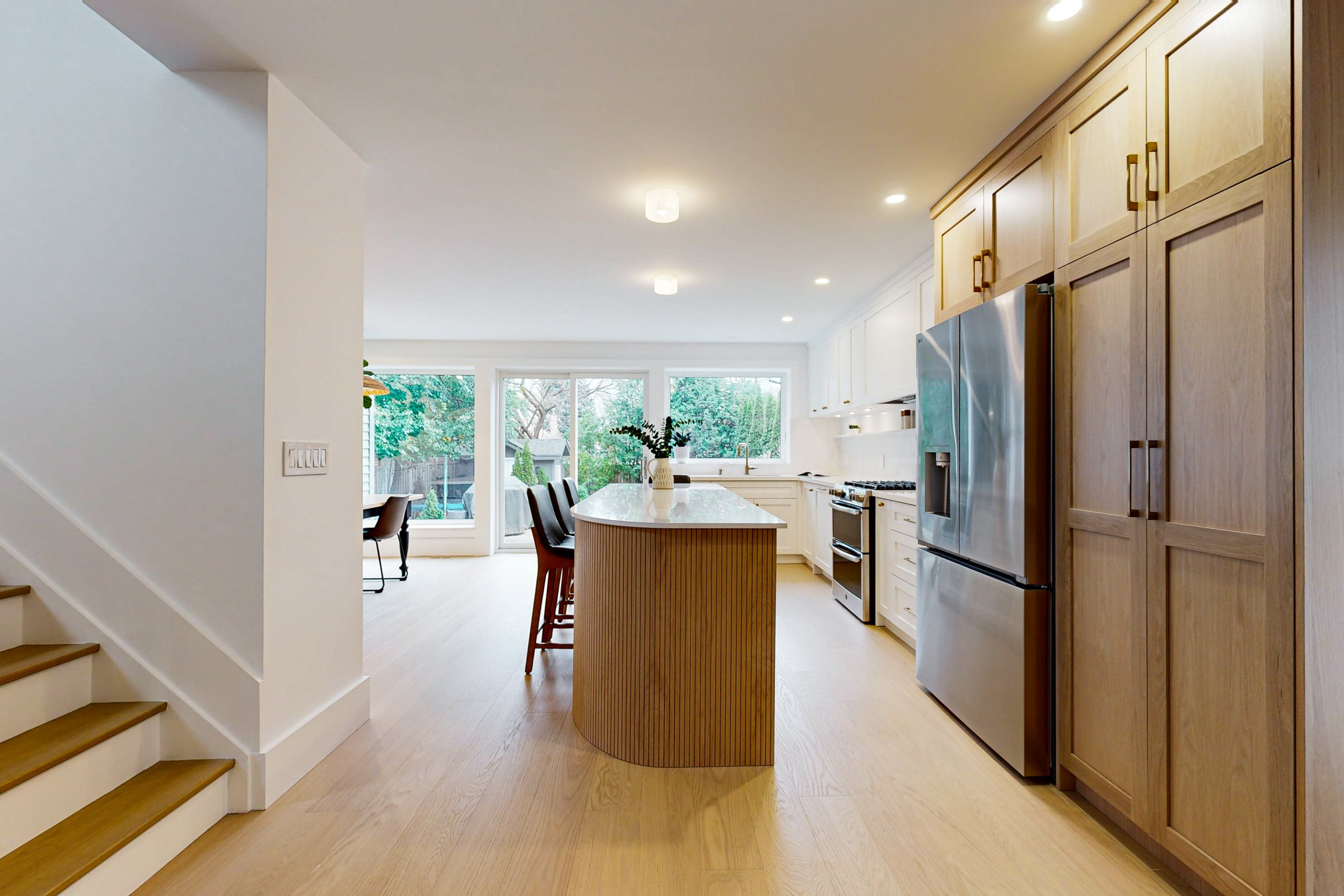
Every project moved through the same integrated process — engineering, permitting, design, and construction coordinated under one roof.
WHEN IT FITSWhen a Reconfiguration Is the Right Move
An interior reconfiguration is often the right solution when the home already has enough square footage, but the layout no longer works for the family.
That may mean:
separated main-floor rooms,
poor kitchen flow,
limited sightlines,
or structural walls interrupting how the home is used daily.
In these cases, removing one or two walls and reorganizing the layout can dramatically improve how the home feels without the cost or timeline of a full addition.
It is not always the right answer.
If the home fundamentally lacks square footage, a Home Addition or Second Storey Addition may ultimately create a better long-term result.
Similarly, if the kitchen location itself no longer works, a broader kitchen renovation with layout relocation may make more sense than simply opening the surrounding walls.
Part of our process is helping homeowners evaluate those tradeoffs honestly before construction begins.
PROJECT SCOPEWhat a Reconfiguration Usually Includes
Most Toronto load-bearing wall removal projects extend beyond the structural opening itself.
Once the walls are removed, the surrounding spaces are typically redesigned to feel cohesive and intentional rather than partially renovated.
A full interior reconfiguration often includes:
Structural Work
Beam installation, temporary shoring, column integration, framing reinforcement, and ceiling reconstruction.
Flooring
New hardwood installation or refinishing existing flooring across the newly connected spaces.
Electrical
New lighting plans, relocated switches, added circuits, and integrated lighting coordination for the combined layout.
HVAC
Supply and return-air relocation where existing walls previously divided the home.
Finishing
Drywall, trim, paint, millwork, built-ins, and cabinetry integrated into the new layout.
Many projects also include a full kitchen renovation, since opening the main floor often changes how the kitchen itself should function within the larger space.
TIMELINEInterior Reconfiguration Timeline
A typical load-bearing wall removal and interior reconfiguration project runs several weeks to a few months on site depending on structural complexity and finish scope.
The construction sequence generally follows:
temporary shoring,
demolition,
beam installation,
structural inspection,
mechanical rough-ins,
drywall and finishing,
flooring,
cabinetry,
and final paint and trim.
Design, engineering, and permitting happen ahead of construction and are coordinated before demolition begins.
Throughout the project, clients receive scheduling updates, construction communication, and forward planning around selections and approvals so the work continues moving efficiently on site.
Related Services
-
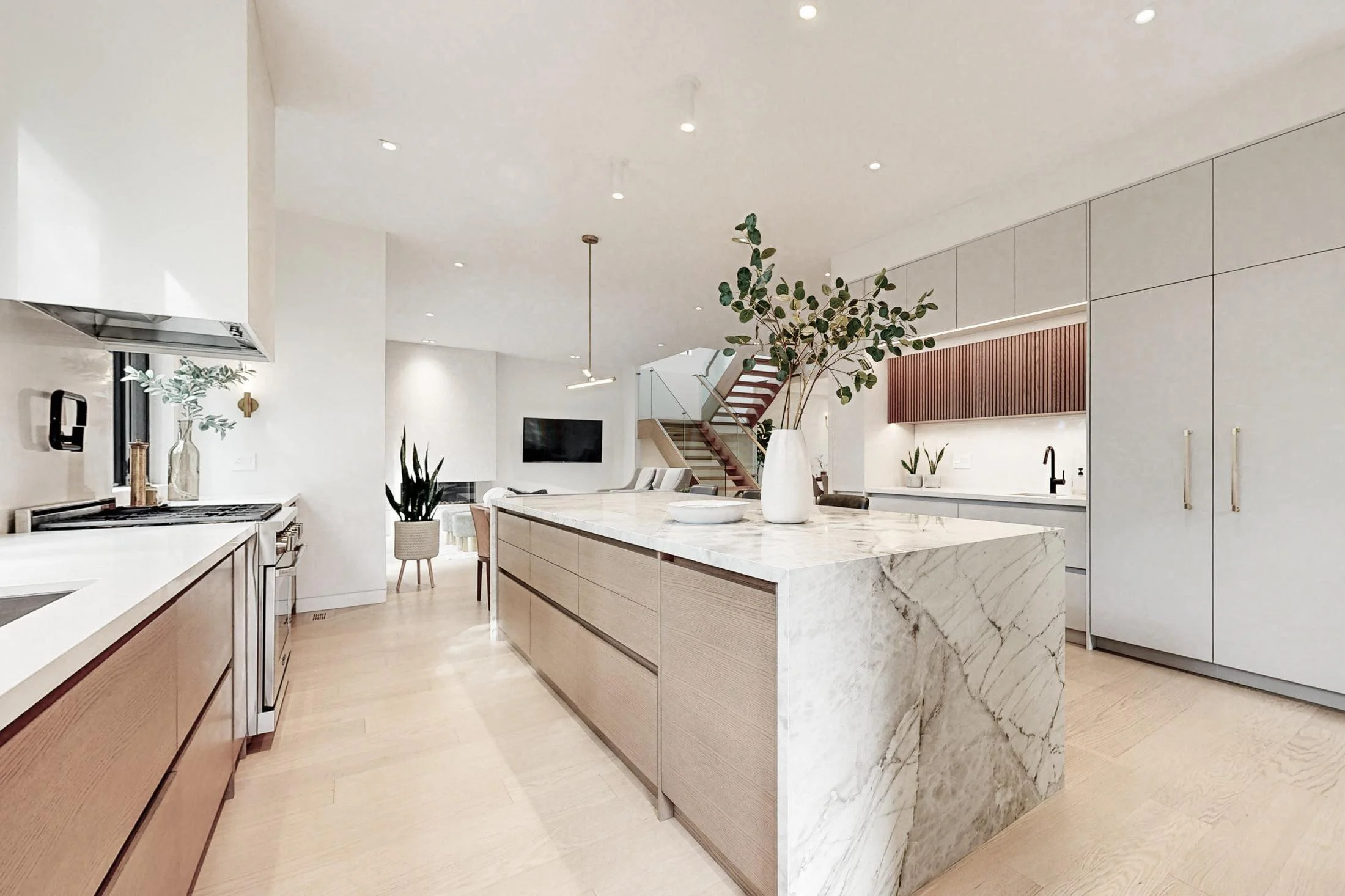
Kitchen Renovations
-
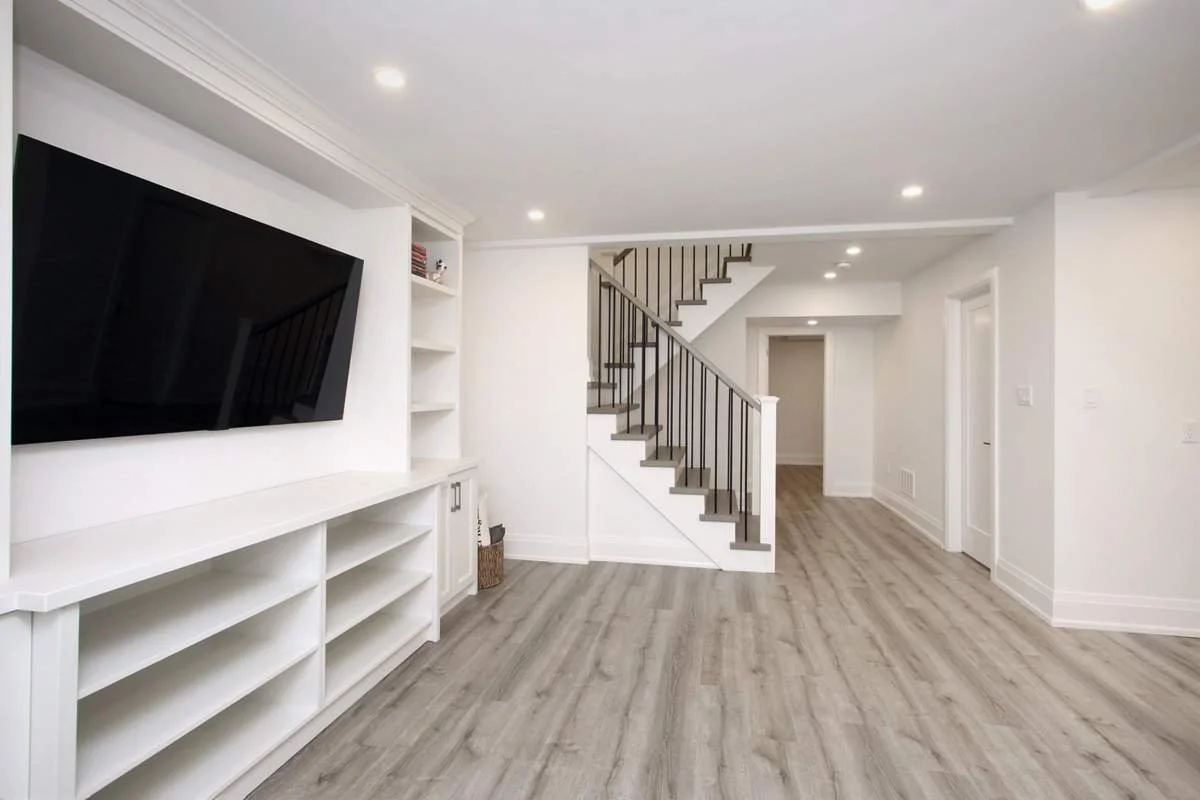
Basement Apartments
Start an Interior Reconfiguration Conversation
If you are considering opening up your main floor, the process starts with understanding the structure of the home and how the layout could function better.
Our team will walk the property, identify likely load-bearing conditions, discuss beam and layout possibilities, and provide realistic guidance around budget, scope, and timeline.
For homeowners evaluating reconfiguration versus addition, we can also compare both approaches early so the decision is based on how the home actually performs — not guesswork.
Chris and Julie personally review every project and guide it through our integrated design-build process from first consultation through final walkthrough.